Bwindi National Park
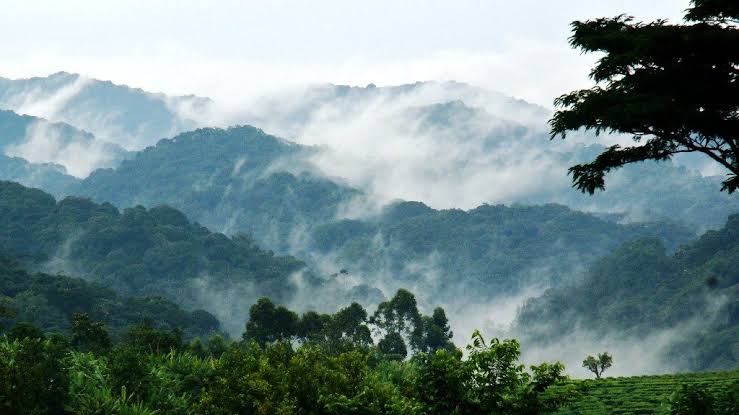
Bwindi National Park is located in the misty forests in southwestern Uganda. Bwindi hold half of the world’s remaining mountain gorillas. These gentle giants are split across four gorilla trekking sectors including Rushaga sector , Ruhija , Buhoma and Nkuringo sectors.
Should You Visit Bwindi?
Bwindi makes sense for travellers who want a specific, once-in-a-lifetime experience and are prepared for the physical and logistical demands that come with it: steep, muddy trails, no fixed trekking time, and a permit cost that sits well above a typical day of game viewing elsewhere in East Africa. If your main interest is classic savannah wildlife, wide vistas, and predictable daily rhythms, Bwindi will feel like an outlier on your itinerary rather than a highlight, and your money is better spent extending time in Queen Elizabeth or the Maasai Mara.
Where Bwindi earns its reputation is in the specificity of the experience itself. Mountain gorillas exist in only two isolated wild populations on earth, one spanning the Virunga volcanoes and the other confined to Bwindi’s roughly 321 square kilometres of ancient montane and lowland rainforest. That rarity is not marketing language; it is a straightforward biological fact that shapes both the price of a permit and the reason so many travellers describe the encounter as the most memorable single hour of their trip. We tell clients directly that the hour itself, once you are in front of the family, tends to erase whatever frustration the trek beforehand produced.
The honest trade-offs are worth stating plainly. Trekking difficulty is not evenly distributed across the park, permits sell out in peak months, and the experience depends on a wild animal’s location on a given day, which no guide can fully control. Travellers with significant mobility limitations, those who dislike uncertainty in their schedule, or anyone unwilling to pay a premium for a single activity should think carefully before committing. For everyone else, Bwindi tends to deliver exactly what it promises.
Why Bwindi Matters
One of Only Two Places on Earth
Bwindi holds roughly half of the world’s remaining mountain gorilla population, with the other half spread across the Virunga Massif shared by Rwanda, Uganda, and the Democratic Republic of Congo. Unlike the Virunga gorillas, which live on relatively open volcanic slopes, Bwindi’s gorillas inhabit dense, ancient rainforest that has stood largely undisturbed for thousands of years, which is part of why the park carries UNESCO World Heritage status. That forest setting changes the character of the trek itself: expect tangled undergrowth, steep ridges, and genuine physical exertion rather than an open walking trail.
Multiple Trekking Sectors, Genuinely Different Experiences
Bwindi is divided into four trekking regions, Buhoma, Ruhija, Rushaga, and Nkuringo, each with its own habituated families and its own character of terrain. Buhoma, the park’s original and most established sector, tends to offer gentler access to several families and the widest range of nearby lodges. Rushaga and Nkuringo, in the south, are steeper and more physically demanding but offer a genuine chance at the gorilla habituation experience, a longer, less regulated encounter with a family still being acclimatised to human presence. We route clients to a specific sector based on fitness level and interest, not simply on which lodge looks best in photographs.
More Than Gorillas
It is easy to forget, given how much attention the gorillas receive, that Bwindi is also one of the richest birding forests in Africa, with well over three hundred and fifty recorded species. Golden monkey trekking belongs to Mgahinga rather than here, but Bwindi’s own forest supports L’Hoest’s monkeys, forest elephants in small numbers, and a Batwa cultural trail run in partnership with the indigenous Batwa community, who lived in this forest before it became a protected park. Travellers who add a day for birding or the Batwa experience often tell us it rounds out the visit in ways the gorilla trek alone does not.
Where Bwindi Fits on a Uganda Itinerary
Bwindi is located in Uganda’s remote southwest, close to the borders with Rwanda and the Democratic Republic of Congo, which makes road access genuinely long: expect roughly eight to nine hours of driving from Kampala or Entebbe, broken up in practice by an overnight stop, most commonly at Lake Mburo National Park roughly halfway along the route. Domestic flights into Kihihi or Kisoro airstrips cut that travel time to under two hours and are worth the added cost for travellers short on time or uncomfortable with long drives on Uganda’s rural roads.
The most common and efficient routing links Bwindi with Queen Elizabeth National Park, roughly two to four hours away depending on the sector, allowing a single circuit that combines gorilla trekking with classic savannah game viewing rather than treating the two as separate trips. Mgahinga Gorilla National Park, roughly one and a half to two hours from Bwindi’s southern sectors, is a natural add-on for travellers wanting golden monkey trekking or a volcano hike alongside the gorillas.
| From | Approx. Distance / Time | Notes |
| Kampala / Entebbe | 8 – 9 hours by road | Usually broken with an overnight stop at Lake Mburo. |
| Kihihi or Kisoro Airstrip | 20 – 40 minutes by air from Entebbe | Fastest option; recommended for time-limited itineraries. |
| Queen Elizabeth National Park | 2 – 4 hours by road | The standard pairing for a combined gorilla and savannah circuit. |
| Mgahinga Gorilla National Park | 1.5 – 2 hours (from southern sectors) | Natural add-on for golden monkeys or a volcano hike. |
When to Visit
Bwindi is rainforest, and rain is a feature of the ecosystem in every month of the year, not an exception. What changes seasonally is the intensity and frequency of that rain, which in turn affects how slippery the trails become and how comfortable the overall trek feels.
| Season | Months | What to Expect |
| Dry Season (Long) | June – August | Firmer trails, the most popular trekking months, permits should be booked well in advance. |
| Dry Season (Short) | December – February | Similarly good trail conditions, slightly less crowded than the June–August peak. |
| Wetter Months | March – May, September – November | Higher rainfall, muddier and more physically demanding trails, noticeably fewer visitors and more permit availability. |
We do not discourage clients from trekking in the wetter months. Gorilla sightings are not weather-dependent, since the families are tracked daily regardless of rainfall, and the quieter trails can make for a more personal experience. What we do insist on is proper gear, real hiking boots rather than trainers, gaiters, and a walking pole, since the terrain punishes underprepared travellers far more than it does underprepared budgets.
Budgeting for Bwindi
Bwindi’s defining cost is the gorilla permit itself, and it should be treated as a separate line item from the rest of your safari budget rather than folded into a general daily rate. As of recent seasons, a standard trekking permit for foreign non-residents runs around 800 US dollars per person, with the habituation experience priced significantly higher, in the region of 1,500 US dollars, for a longer and less structured encounter with a family still being acclimatised. Permits are allocated per family per day, are limited in number, and should be secured through a licensed operator months ahead of a peak-season trek.
| Tier | Approx. Cost (per person/night, excluding permit) | What You Get |
| Budget | US$60 – 150 | Community-run guesthouses or simple lodges near the park boundary, basic but clean facilities. |
| Mid-Range | US$180 – 350 | Established lodges with en-suite rooms, generator or solar power, set-menu dining, and reliable transfers to the trailhead. |
| Luxury | US$400 – 900+ | High-end forest lodges with private verandas overlooking the canopy, higher staff ratios, and more comfortable post-trek recovery facilities. |
A practical note we give every client: the permit cost is fixed regardless of which lodge tier you choose, so travellers on tighter budgets should not feel pressured into luxury accommodation to justify the trek. A well-run mid-range lodge, chosen for its proximity to your assigned trekking sector rather than its finish quality, tends to serve most travellers better than an expensive property a long drive from the trailhead.
Where to Stay
Lodge choice at Bwindi should be driven primarily by which trekking sector you are assigned to, since transfer times between sectors can run over an hour on rough roads. Booking accommodation before confirming your sector, or vice versa without checking the distance, is one of the most common planning errors we correct for clients.
Buhoma Sector
- Buhoma Lodge and similar mid-to-upper range properties sit close to the park headquarters, the most convenient base for the park’s original and best-established trekking region.
- A range of community-run budget guesthouses cluster around Buhoma village, a good option for cost-conscious travellers willing to trade finish quality for authenticity and lower prices.
Ruhija Sector
- Smaller, quieter lodge selection, generally mid-range, well suited to birders given Ruhija’s reputation as one of the park’s strongest birding areas.
Rushaga and Nkuringo Sectors
- A growing number of comfortable mid-range and luxury lodges have opened here in recent years, reflecting the sectors’ popularity for the habituation experience and multiple-family trekking options.
Activities Inside Bwindi
Gorilla trekking, the park’s central activity, beginning with an early morning briefing at the sector headquarters before rangers assign trekkers to specific families based on fitness and preference.
- The gorilla habituation experience in Rushaga and Nkuringo, offering up to four hours with a family still being acclimatized, for travellers wanting a deeper, less time-boxed encounter.
- Guided birdwatching walks, particularly strong around Ruhija, for the park’s more than three hundred and fifty recorded species.
- The Batwa Cultural Trail, run with the indigenous Batwa community, offering insight into forest life before Bwindi’s protection as a national park.
- Nature walks along maintained forest trails for travellers not trekking gorillas that day, including waterfall walks near Buhoma.
One point we make clear before every trek: there is no guaranteed duration or difficulty level set in advance. Rangers track each family’s likely location using overnight trackers, but the final distance and terrain depend entirely on where the gorillas have moved that morning. Treks have run under an hour and have also run past six hours; both are within normal range.
Planning Advice
- Book your gorilla permit at least four to six months ahead for June–August or December–February travel, since sector allocations sell out well before the season begins.
- Choose your trekking sector based on realistic fitness levels first, and lodge finish quality second; Rushaga and Nkuringo are noticeably steeper than Buhoma.
- Pack proper hiking boots, gaiters, gardening gloves for gripping vegetation, and a light rain jacket regardless of season, since rainforest weather changes quickly.
- Budget a spare buffer day where possible; road conditions and border-area logistics in this part of Uganda can occasionally cause delays that a tight schedule cannot absorb.
- Confirm current permit pricing directly with your operator before finalising a budget, since gorilla permit fees are periodically revised by the Uganda Wildlife Authority.
Frequently Asked Questions
How physically demanding is gorilla trekking?
It varies considerably by sector and by the gorilla family’s location on the day, ranging from a gentle forty-five-minute walk to a strenuous multi-hour climb through dense, muddy terrain. Reasonable fitness is required across all sectors, and porters are available to carry bags and assist on steep sections.
Is the gorilla sighting guaranteed?
Sightings are extremely likely but not contractually guaranteed, since trackers locate the gorillas fresh each morning rather than following a fixed route. The Uganda Wildlife Authority’s success rate runs very high, and most operators offer some form of assurance or partial refund policy in the rare event of a missed sighting, which is worth confirming before booking.
How much does a gorilla permit cost?
As of recent seasons, a standard trekking permit for foreign non-residents runs around 800 US dollars per person, with the habituation experience priced higher. Fees are set by the Uganda Wildlife Authority and are periodically revised, so current pricing should always be confirmed with your operator.
Which trekking sector should I choose?
Buhoma suits first-time trekkers wanting the gentlest terrain and the widest choice of established lodges. Rushaga and Nkuringo suit more experienced or adventurous travellers, particularly those interested in the habituation experience. Ruhija suits birders wanting to combine gorilla trekking with strong forest birding.
Can children trek to see the gorillas?
The Uganda Wildlife Authority sets a minimum age of fifteen for gorilla trekking permits, a rule applied consistently across all sectors and not something local operators can override.
What should I combine Bwindi with?
Queen Elizabeth National Park is the standard pairing, reachable in two to four hours depending on sector, followed by Mgahinga Gorilla National Park for golden monkey trekking where time allows.